
Mission profiles change fast. A thermal sight that adapts without gear swaps saves time and reduces failure points. The INFITAC IOTS IOL25 address that reality with a 3+1 design that works as a standalone scope, a Clip-On thermal module, a handheld scanner, and a platform that accepts a red dot through a native RMR interface. The optic uses a 25 mm F1.0 lens, and an IoT link can send the live view to a helmet-mounted DNVS-series. The goal is simple: give you one thermal that covers four roles with consistent controls.
World's First 3+1 Multi-Purpose Thermal Sight
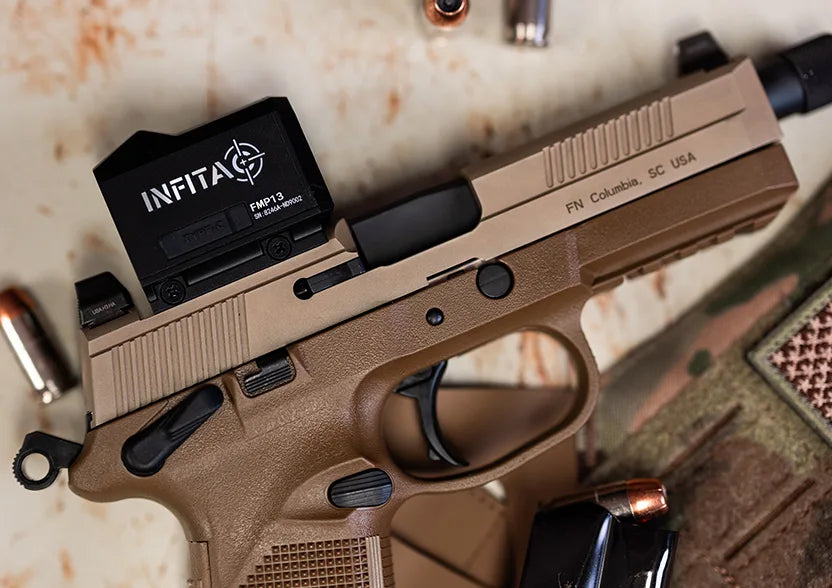
One optic covers four roles: standalone scope, Clip-On mode, handheld scanner, along with a 45° offset RMR mount for red dot.
Harness advanced IoT connectivity with IoT receiving device for a real-time shared vision, enabling seamless collaboration in the field. Besides, onboard photo/video/audio recording are built in, making capturing wonderful moments more easily. The IOTS is IP67 rating and runs on a single 18650 battery, providing high reliability for harsh environments.
| IOL25 | |
| Resolution,pixels | 384x288,12μm |
| NETD | <20mK |
| Refresh Rate | 50Hz |
| Lens | 25mm F1.0 |
| FOV | 10.5° x 7.9° |
| Battery Life | >6h |
More Than Just a Sight - it's your all-in-one thermal tool
Traditional multi-role thermals usually promise three modes. IOTS adds a fourth by building the red dot pathway into the optic itself through the RMR interface and matching offset mounts. That addition matters in real tasks. Close targets during bright daylight favor a red dot, identification in low light favors thermal. A platform that supports both without changing the rifle’s footprint increases flexibility and keeps handling familiar.
What the “3+1 System” Really Means
Controls stay familiar as you switch modes, and the on-screen image remains consistent, which shortens the learning curve and helps teams standardize.
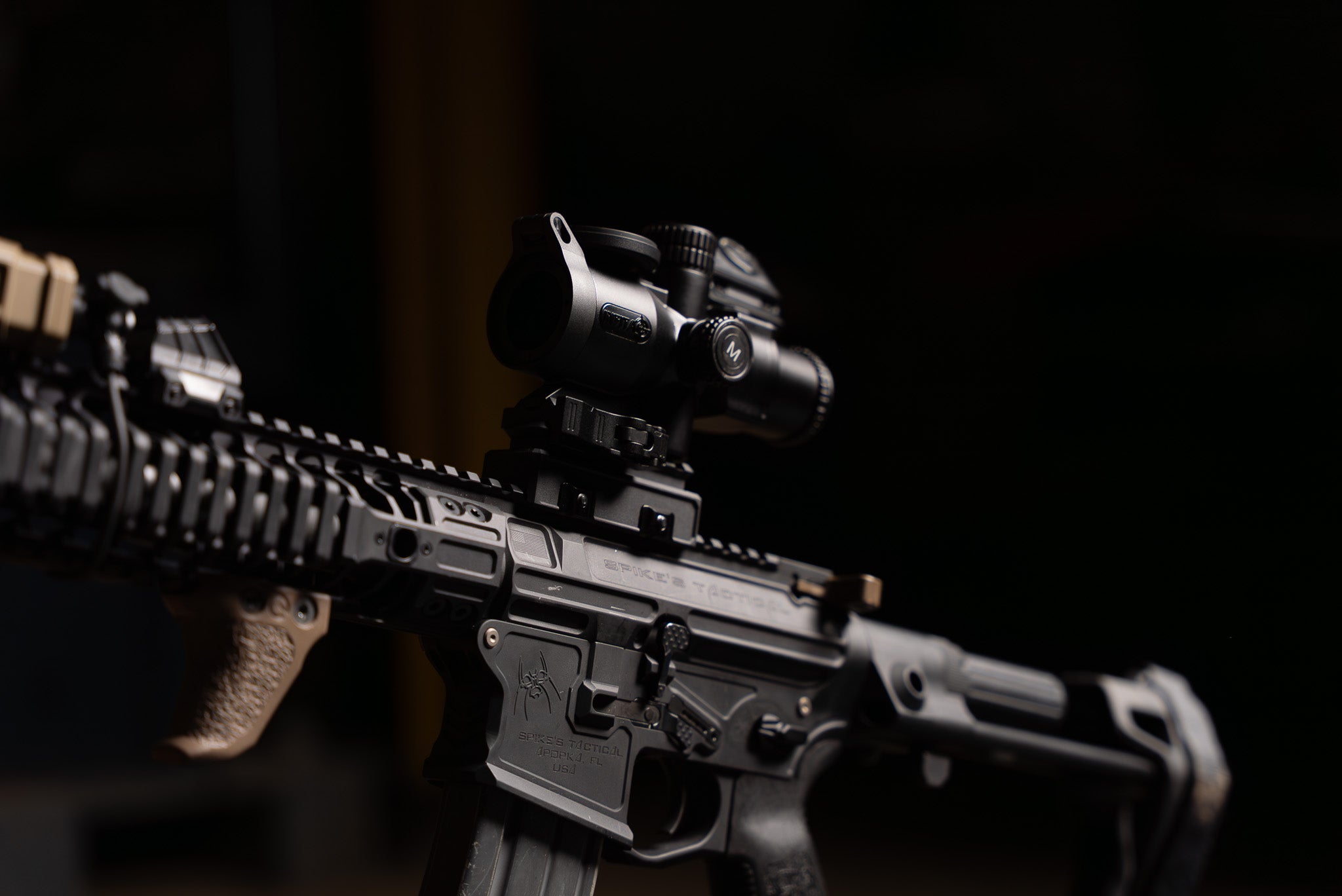
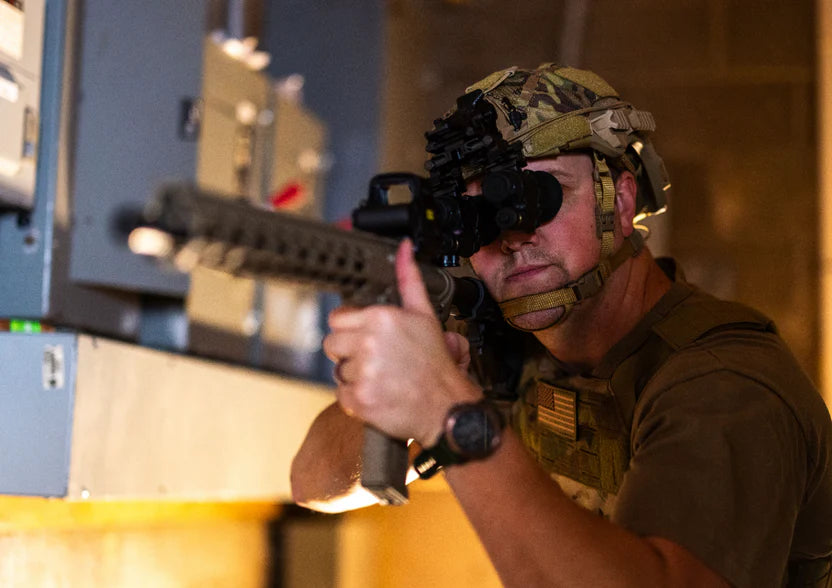
- Standalone scope: mount IOL25 as the primary thermal. The high-resolution detection and a 25mm F1.0 lens provide crystal-clear images. It is ideal for night-range training, professional drills such as CQB, and outdoor. A large eye relief supports a comfortable and stable head position for shooting even with high-caliber rifles that produce stronger recoil. When connected to a head-mounted display, you or a nearby partner can view the thermal feed, reducing exposure while keeping both shooters on the same picture.
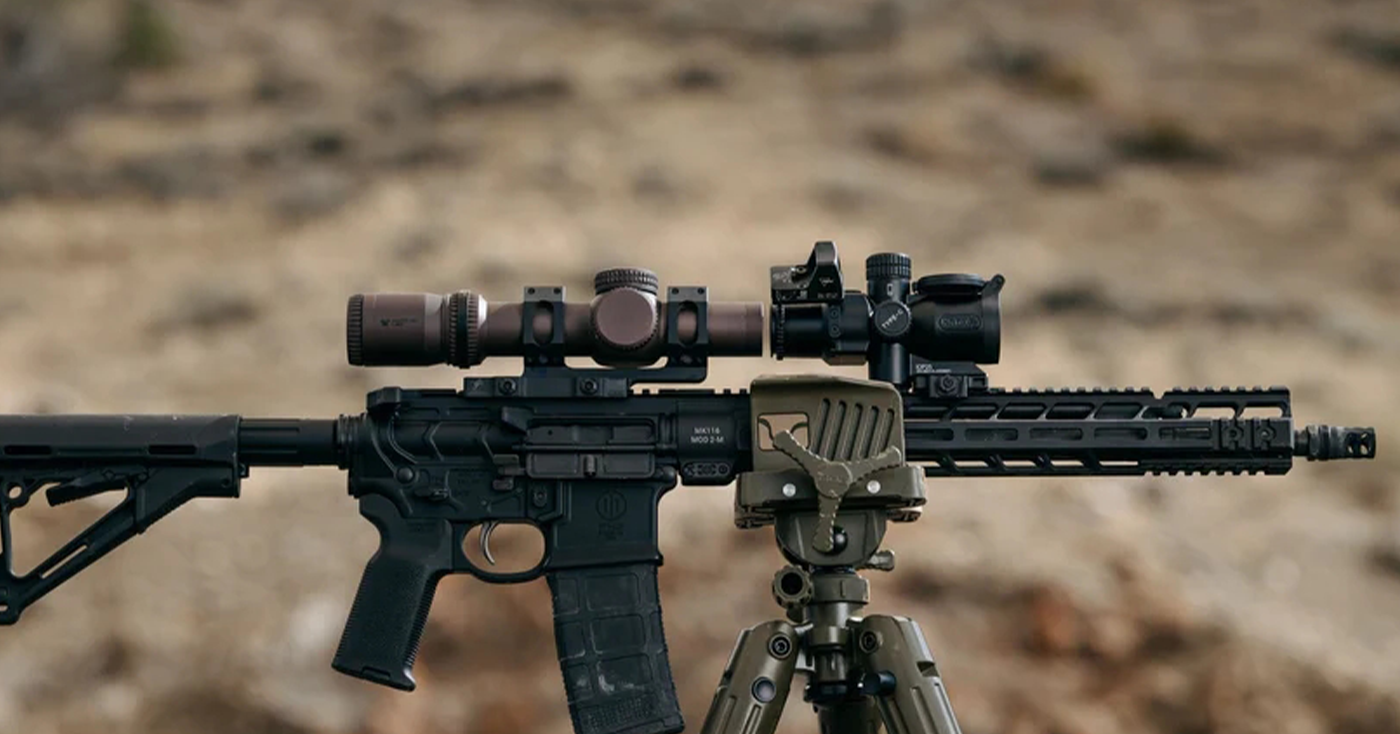
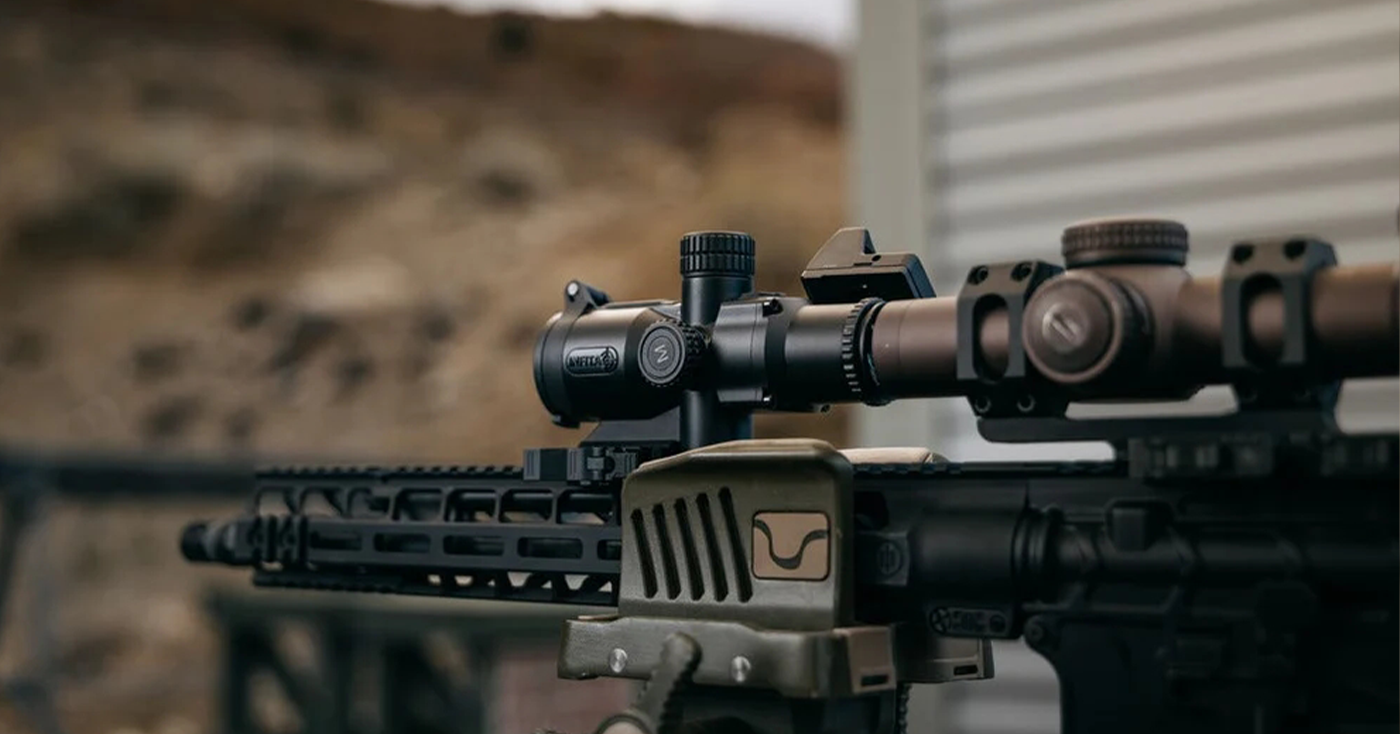
- Clip-On mode: When the IOL25 is in Clip-On mode, the thermal reticle will be invisible. Place the IOL25 ahead of an LPVO or fixed-magnification prism. The quick-detach mount lets you install or remove the IOL25 in front of the LPVO on the rail quickly and easily. This configuration is well suited for night outdoor and long-range shooting in low-light environments. You keep your daytime holds while gaining thermal detection in mixed light. Many users consider this the cleanest way to add night capability without re-zeroing the day optic.
- Handheld monocular: detach and scan when muzzle discipline matters. Start in the handheld role to scan outbuildings, fence lines, and tree lines. It is well suited for home-defense patrols and field observation. The compact, lightweight design makes it practical during long-duration perimeter checks.
- “+1” red dot offset: use the native RMR interface with a 45-degree offset mount for a micro red dot, then you can get a second optic platform. Roll to the dot for close-quarters shots in bright conditions, then switch back to thermal for positive identification at longer distances. The pairing keeps both options ready without cluttering the rail. Understanding the nuances of this hybrid technology is key, and you can learn more about what a thermal red dot really means for shooters.

Thermal Rifle Sights IOTS IOL25
Why Choose IOTS
High image performance
The IOTS IOL25 is equipped with a 384x288, 12μm sensor, delivering clear imaging and sharp details. A fast thermal core works with a 25mm F1.0 lens and image enhancement function (SRE tech) so edges and textures stand out instead of washing together. The 50Hz high refresh rate provides a fluent image while in fast movement. Multiple palettes make it easier to fit personal preferences and mission needs.
Multi-purpose uses in various conditions
The "3+1" design delivers four roles on one device, standalone scope, Clip-On mode, handheld scanning, plus a 45-degree red dot path via the native RMR interface. Controls stay consistent across roles, so switching modes doesn’t force new muscle memory. Thanks to its precision-engineered QD mount, you can quickly detach it from your rifle for handheld use and remount without losing zero—no re-zeroing required.
Typical professional design
The IOTS is a classic professional style with a compact and lightweight design, and it is equipped with some detailed features for professional shooting.
- The wireless link can mirror the live view to a DNVS head-mounted display to support a corner shot system with less exposure.
- The flash killer (Anti-Reflection Device) and an eyeguard help reduce light reflection and spill.
- The Focus-free feature helps ready to use, without having to manually focus repeatedly. It can improve your observation efficiency and continuity, and reduce operation difficulty.
High reliability
Built for hard use, the sight combines a sealed, hard-anodized metal housing and IP67 rating, so it keeps running in vehicles, training houses, and bad weather. The IOTS comes with two rechargeable 18650 batteries and supports external power supply, keeping longer sessions moving.
The IOTS IOL25 is Coming
One thermal, four roles: the IOTS 3+1 design delivers a high-quality, professional-grade thermal rifle sight with consistent controls across all roles. You can use it as a standalone scope, handheld monocular, Clip-On module, plus pair it with a 45 offset-mounted red dot for lightning-fast close-range aiming. The IOTS can meet all your professional demands.
IOTS IOL25 is slated to launch in November—stay tuned!
FAQs
Q1. Do clip-on swaps require a new zero?
Use the same rail slot and torque. Quality clip-ons keep POI shift minimal, though a quick confirmation group is prudent.
Q2. How should I manage thermal calibration (NUC)?
Let the unit reach ambient temperature, then run a manual NUC after large temperature changes. Repeat if image uniformity or contrast degrades.
Q3. Should I zero while using electronic zoom?
Zero at native resolution. Electronic zoom aids identification and aiming precision but does not change true boresight or mechanical zero.
Q4. What’s the correct way to clean a germanium objective?
Use dedicated IR lens wipes or cleaner. Avoid ammonia and household alcohol. Work from the center outward with light pressure to protect coatings.

Leave a comment
All comments are moderated before being published.
This site is protected by hCaptcha and the hCaptcha Privacy Policy and Terms of Service apply.