
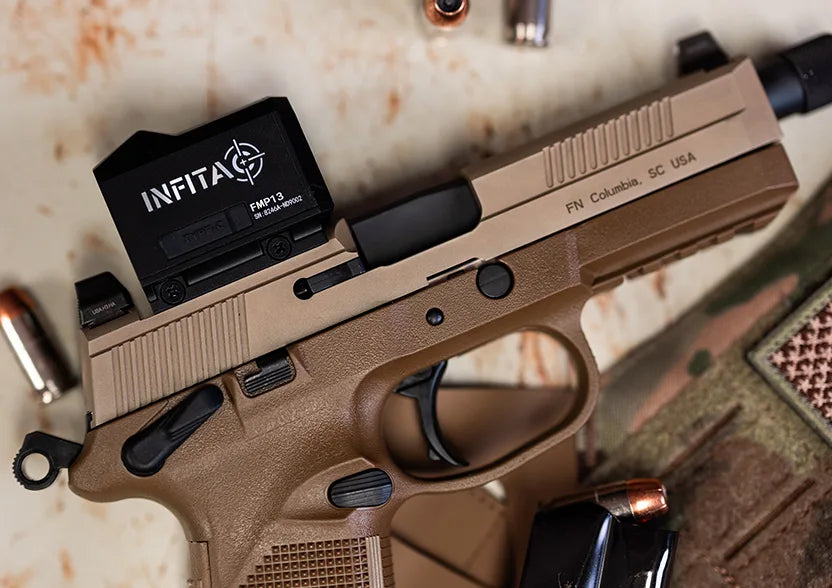
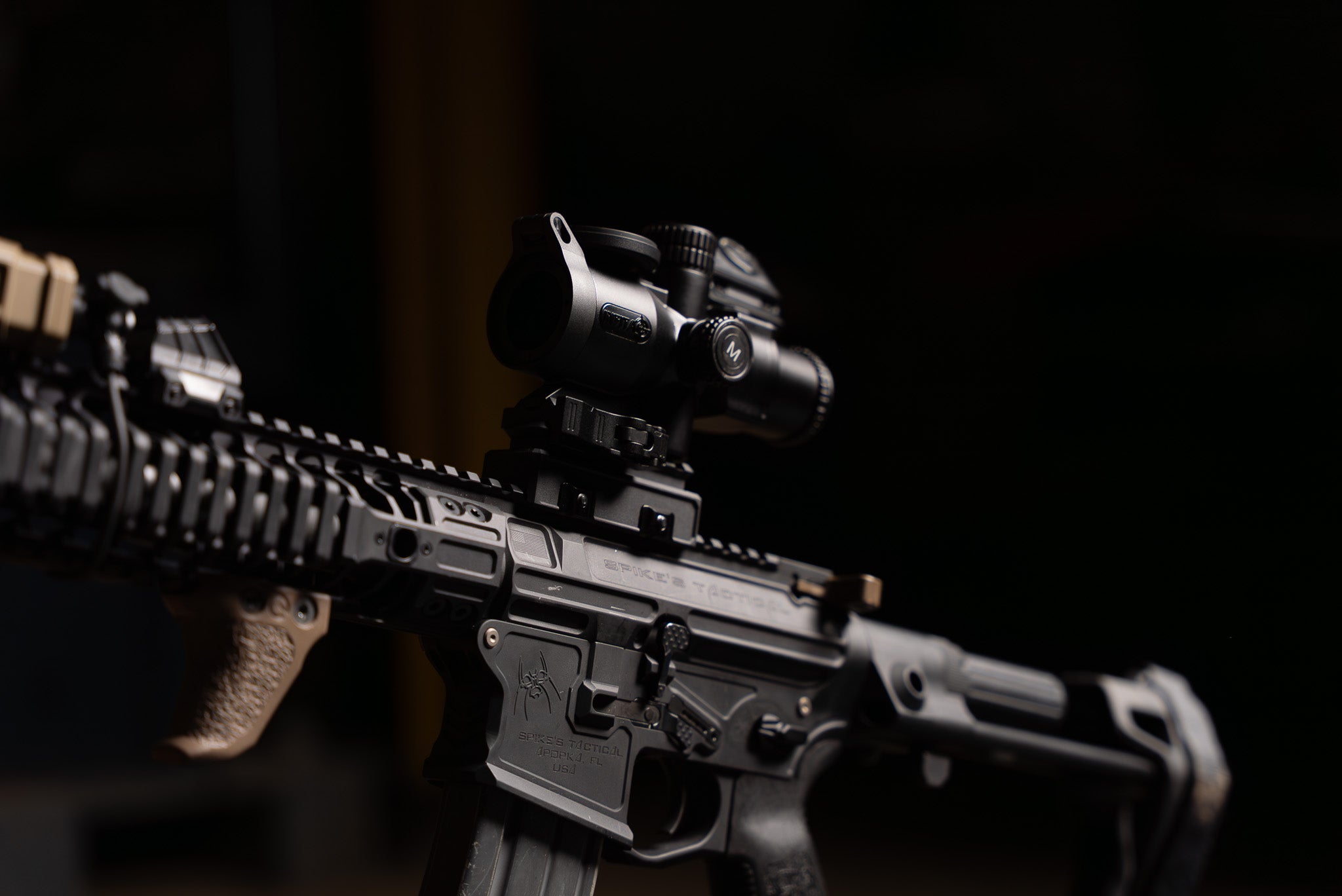
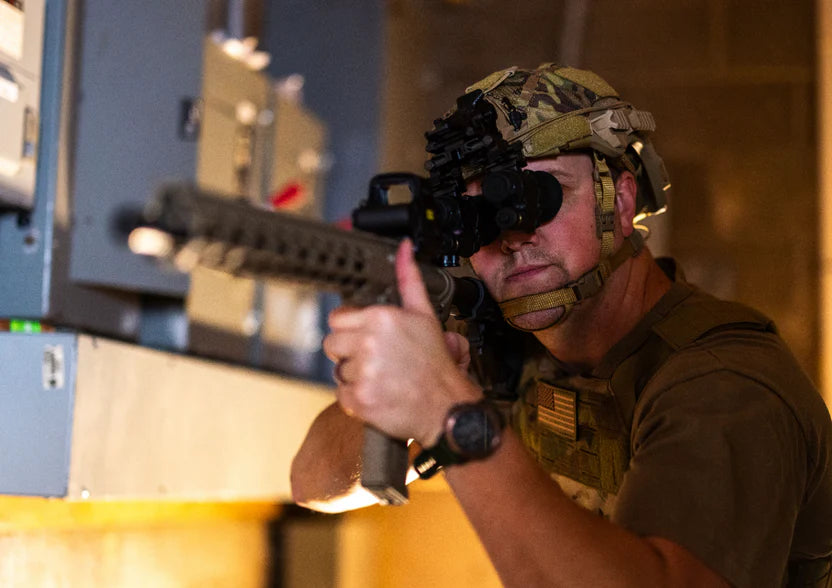
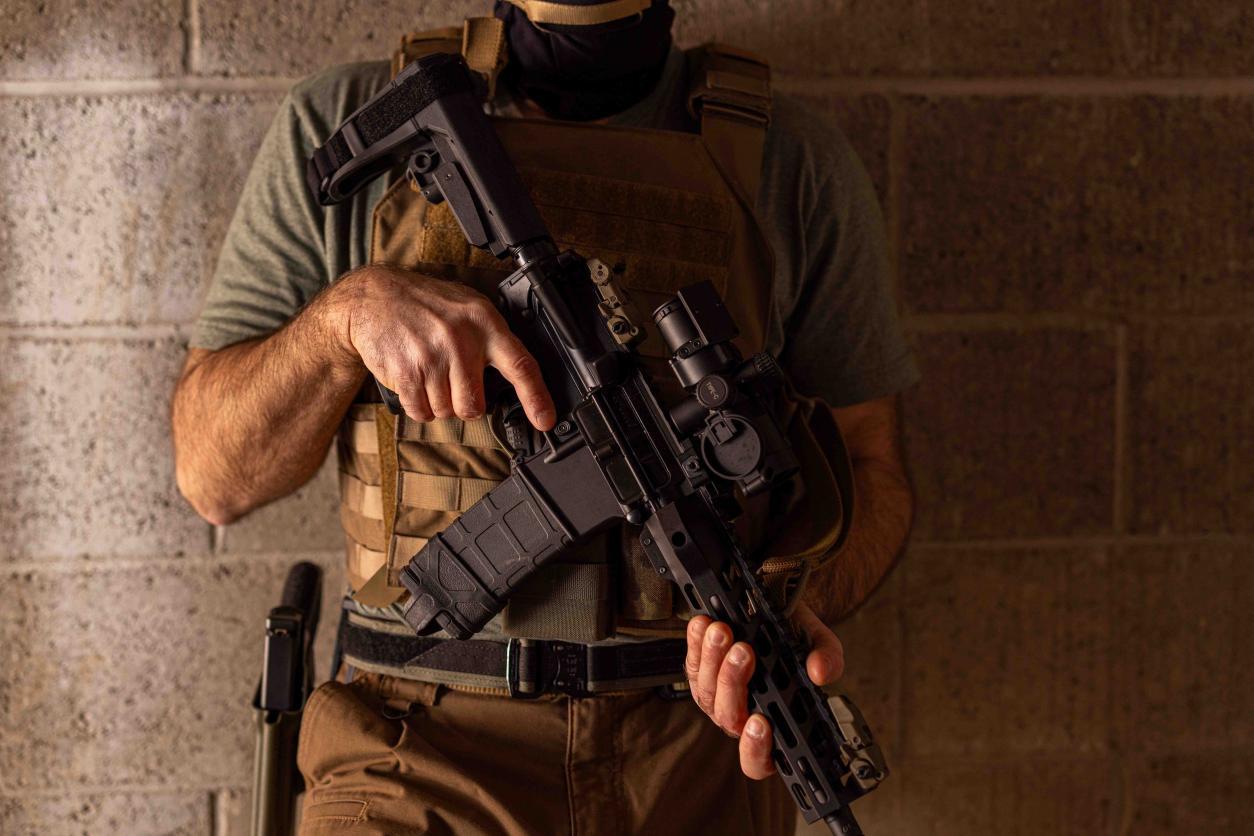
For many shooters, adding accessories to an optic is not just about what is available, but about what is actually worth using. An anti-reflection device, often called Kill Flash, is a good example. It is designed to reduce visible glare from the front lens, but that does not automatically mean every setup needs one. So, when does lens reflection become a real problem, and when is a Kill Flash actually worth adding?
When Does Glare Become a Real Problem on an Optic?
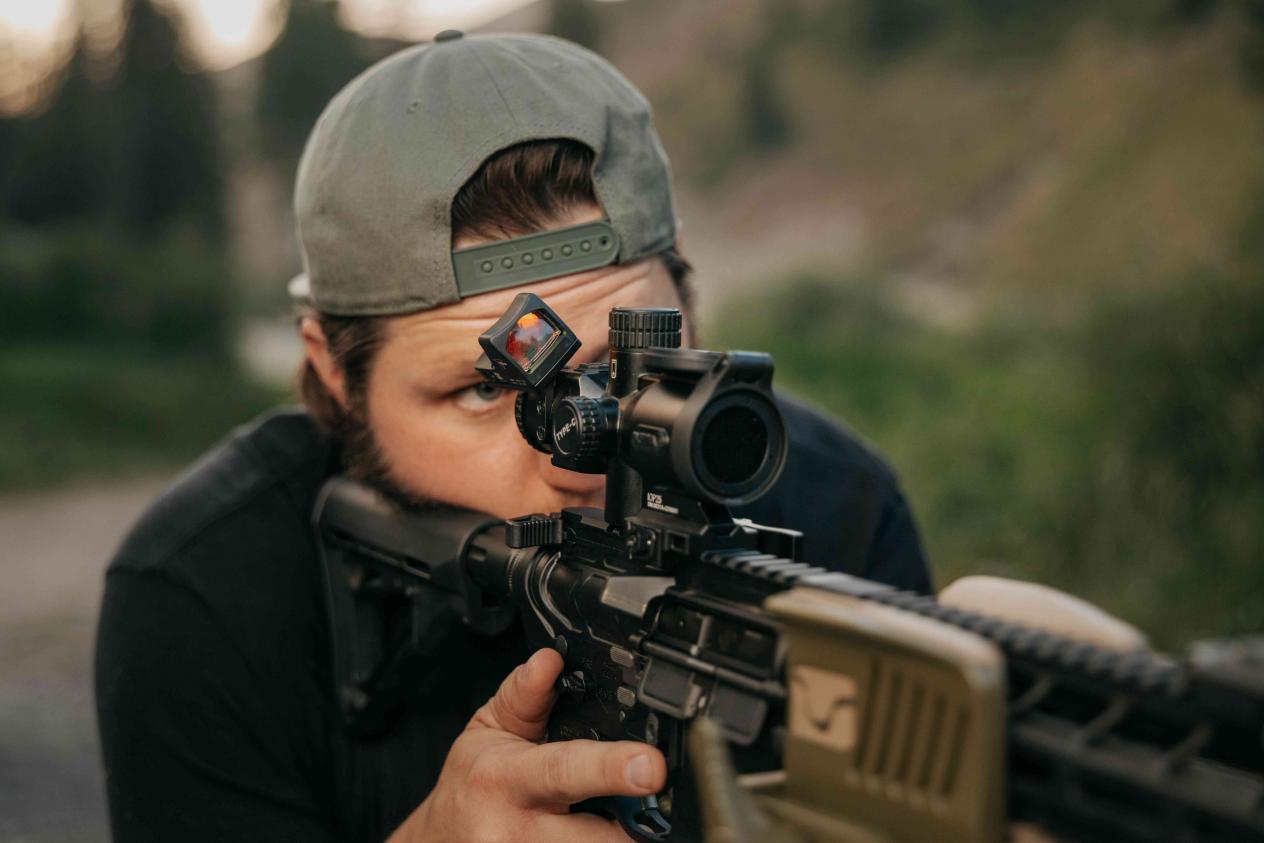
Lens reflection isn’t always a problem. It tends to appear only under a specific set of conditions: strong direct sunlight, open terrain, and situations where staying undetected is important. When sunlight hits the coated front lens of a red dot sight or rifle scope at the right angle, it can reflect outward as a sharp, concentrated flash that is visible from a considerable distance.
- Shooting around wildlife: Animals are sensitive to sudden unnatural light. A glint off your rifle optics at the wrong moment can spook the game before you are ready.
- Professional and field environments: In situations where concealment matters, reflection gives away your position before the shot.
Terrain also plays a role. Desert flats, snow-covered fields, high-altitude ridgelines, and coastal open land all have limited vegetation and shadow to absorb reflected light. A thermal scope or gun sight used in these conditions carries the same outward reflection risk as any other optical sight. Glare becomes a genuine problem when the light is strong, the ground is open, and staying unnoticed matters.

Thermal Rifle Sights IOTS IOP13
What Does an Anti-Reflection Device Change in Actual Use?
An anti-reflection device is a honeycomb-patterned screen that attaches to the front of an optic. The grid lets direct light pass through normally. Light that hits the lens at an angle gets blocked before it can reflect outward. In the industry, this accessory is also widely referred to as Kill Flash.
Its effect on your own sight picture is minimal. Kill Flash does not improve image sharpness or brightness. What changes is only what is visible from the outside. Your view through the optic stays largely the same.
A few practical details worth knowing:
- Adding a Kill Flash does reduce how much light reaches the lens. Light transmission loss is typically 3 to 10%, depending on grid density.
- At higher magnification, the honeycomb cells may appear faintly at the edges of your sight picture. This is more noticeable above 6x and less of a concern on red dot sights or low-power optics.
- A Kill Flash also provides physical protection for the front lens against dust, moisture, and direct contact.
For users running a thermal rifle scope, the light transmission factor is less of a concern. Thermal imaging reads heat signatures rather than visible light, so a minor reduction in incoming light has a limited effect on how a thermal scope performs. This makes the Kill Flash decision more suitable for thermal optics than for standard daytime rifle optics.

Where Can It Help Most in Bright Light and Open Terrain?
A Kill Flash makes the most difference when you are out in direct sunlight with little natural cover around you.
- Open terrain and field use: In open country, a flash from your rifle optics can compromise your position or spook the game before you are ready to act. Removing that variable is a straightforward practical advantage in any exposed outdoor environment.
- Outdoor shooting in direct sunlight: On open ranges or field courses in midday conditions, a red dot sight mounted on a rifle can catch sunlight from certain angles. Even in competition or training environments where concealment is unnecessary, this reflection can still create glare that disrupts the shooter, especially when the sun is at a low angle or the optic is mounted high.
- Daytime use of thermal optics: A thermal rifle scope or thermal scope used during daylight still has a fully exposed front lens with the same outward reflection risk as any other gun sight. The imaging technology inside the optic has no effect on what happens on the glass surface. A Kill Flash addresses the reflection regardless of the optic type.
Where the benefit is limited:
- Indoor ranges with controlled lighting
- Night-only setups using thermal or night vision optics
- Dense woodland where heavy canopy naturally diffuses direct overhead light
What Trade-Offs Should You Expect Before Adding One?
Kill Flash is not the right addition for every setup. Before committing, there are a few practical limitations worth knowing.
- Reduced light in low-light conditions: The 3 to 10% light transmission drop is negligible in bright daylight. At dusk or in overcast weather, that reduction can affect image brightness on standard optical sights. For thermal optics, the impact is limited because the imaging process is heat-based.
- Grid visibility at higher magnification: On variable scopes set above 6x, the honeycomb cells can appear faintly in the periphery of the image. The central sight picture is not obstructed, but some shooters find it distracting. On a red dot sight or fixed low-power optic, this is rarely a practical concern.
- Added length at the front: Most Kill Flash devices add 10 to 20mm to the objective end of the optic. On a compact or tightly configured setup, this can affect forward clearance depending on the mounting position.
-
Fit and compatibility: Outer diameter, attachment method, and thread pitch all vary by optic model. A device that shifts or loosens under recoil will fail to block outward glare. Confirming the spec match before purchasing avoids an expensive misfit.

How to Decide If It Fits Your Setup
The decision comes down to your actual shooting conditions. If your setup regularly puts you in direct sunlight on open ground, a Kill Flash addresses a real and recurring problem. If your shooting is mostly indoors or at night, the same accessory adds little practical benefit.
| Situation | Kill Flash useful? |
| Open terrain, daytime field use | Yes |
| Outdoor professional or competition shooting in sunlight | Yes |
| Thermal rifle scope in daytime reconnaissance | Yes |
| Red dot sight on a rifle used outdoors regularly | Yes |
| Indoor range use only | No |
| Night-only thermal or night vision setup | No |
| Dense woodland, heavy canopy | Situational |
Optic type is also worth factoring in. A Kill Flash on a thermal scope or thermal red dot used across day and night conditions effectively handles the daytime reflection risk. The lens protection benefit applies at all times, regardless of lighting. On an optical sight used only indoors, however, it adds almost no value.
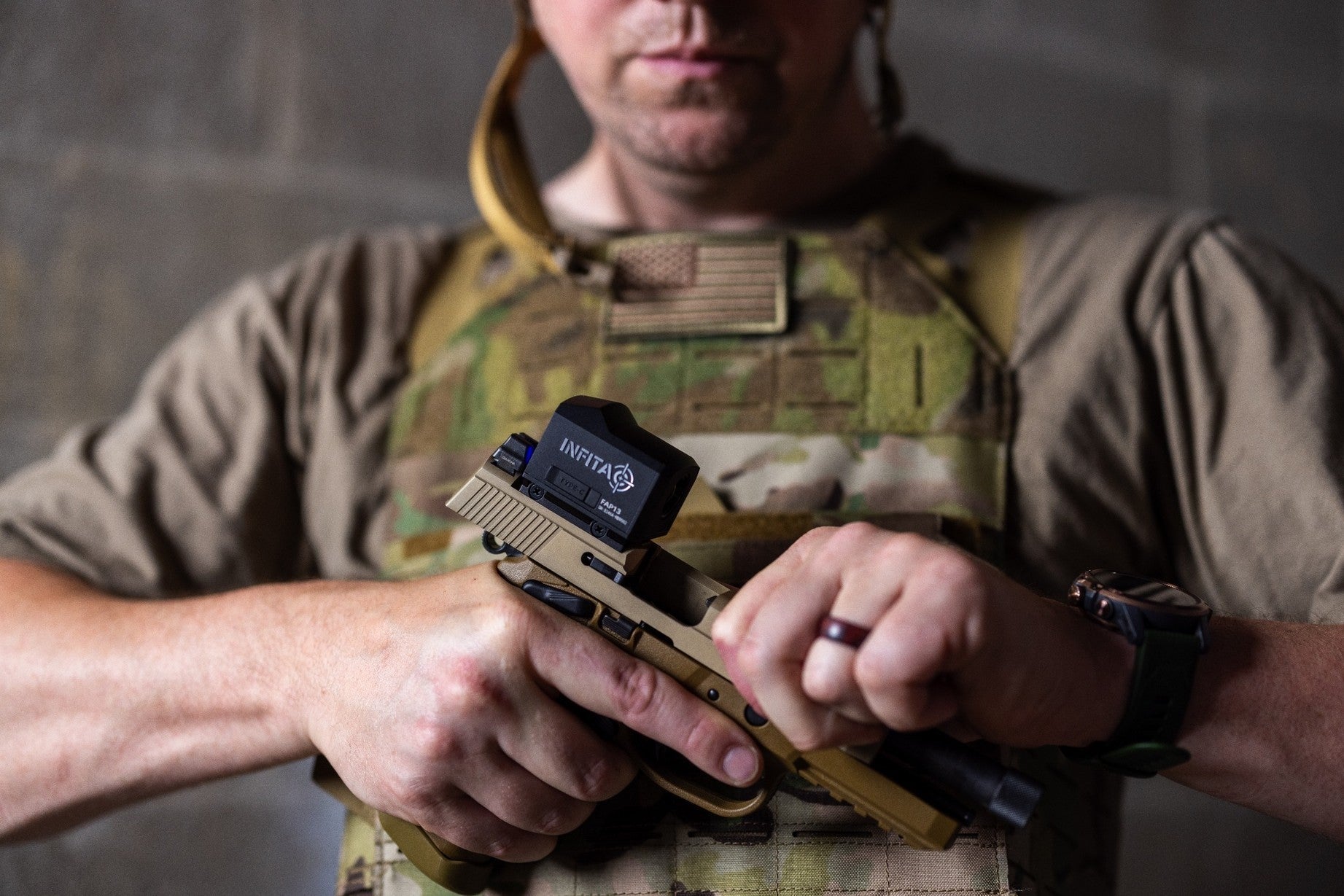
One practical note: Some thermal rifle scopes already include a Kill Flash in the package. For example, the Infitac IOL25 and IOP13 thermal rifle sights come standard with a removable Flash Killer (anti-reflection device).

Use an Anti-Reflection Device When Your Situation Demands It
A Kill Flash solves a defined problem in defined conditions. For shooters who regularly work in open terrain under direct sunlight, it removes a genuine risk and earns its place on the setup.
During low-light conditions usage or in situations where concealment is not critical, the Flash Killer can be removed to present a more natural and realistic image through the optic. On the IOL25 and IOP13, this gives users a clearer sense of the product’s true imaging performance without the influence of the honeycomb screen. This makes the Flash Killer a flexible accessory rather than a permanent requirement, allowing shooters to adapt the setup based on actual field conditions.
FAQs about Kill Flash Use
Q1: Does adding a Kill Flash affect my zero?
No. A Kill Flash attaches to the outside of the objective lens and has no contact with the optical or mechanical components that determine zero.
Q2: Do Kill Flash devices require any maintenance?
Minimal. Debris caught in the honeycomb grid should be cleared periodically with compressed air. Avoid brushing directly across the cells, as this can bend the grid walls and reduce effectiveness.
Q3: Can a Kill Flash be used with flip-up lens caps?
It depends on the cap design. Some flip-up covers are compatible and close over the ARD without issue. Others do not accommodate the added depth. Check clearance dimensions before combining the two.

Leave a comment
All comments are moderated before being published.
This site is protected by hCaptcha and the hCaptcha Privacy Policy and Terms of Service apply.